Summoner's Gambit Lord of Shadows Builds
High-skill shadow decks that weaponize energy risk and board disruption.
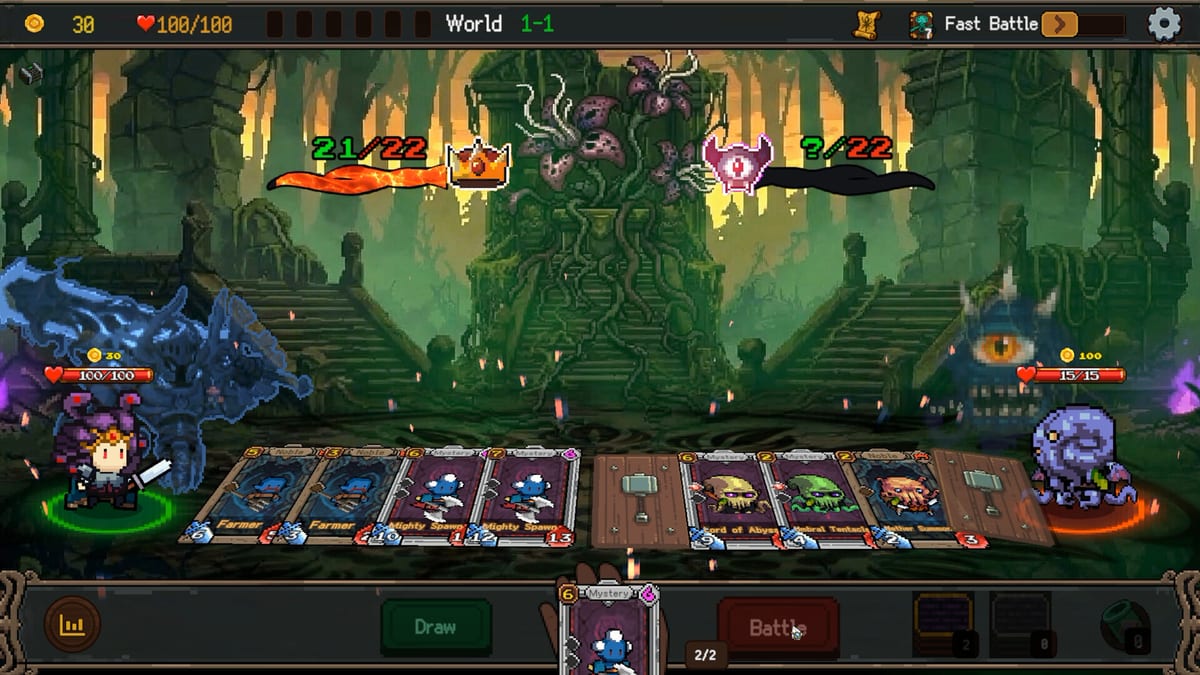
Lord of Shadows identity
Lord of Shadows entered Summoner’s Gambit during the demo era as the second playable class beside Noble Serpent, bringing a distinct exclusive deck and a more chaotic read on the same core rules. Where Serpent prefers ledger-clean energy, Shadows thrives when disruption, attrition, and calculated overflow gambits turn the blackjack-style 21 limit into a weapon. Official messaging highlights Energy Overflow and Cheat the Odds as signature systems—Shadows is where those systems stop being safety lectures and start being win conditions.
Ground yourself with Getting Started if the UI still feels foreign, then study Energy Overflow before you treat every fight like a coin flip. Sibling pages: Noble Serpent, Child of the Forest, King of the Wilds, plus Beginner Builds when you need a safer on-ramp.
Early-run priorities
Shadows early game should establish disruption without busting. Seat pieces so attack priority deletes or delays the enemy engine, keep fragile payoff units out of first-strike rows, and only climb toward 21 when the board state already favors you. Random Lovecraftian events can spike variance—do not enter them with a deck that only functions on perfect high rolls.
Draft with fusion in mind. Nearly all creature cards can fuse; hybrids inherit traits from both parents and can cross the four ancient factions for dual-race tools. Shadows players often overkeep spooky uniques that never fuse into a coherent spine. Prefer parents that combine disruption with enough durability to act twice. Use Creature Cards for system context and the Units Tier List for role strength.
Mid-run: fusion, runes, and intentional risk
Fuse when you have a clear hybrid story—attrition plus reach, or disruption plus a second race keyword—not when you are bored. A fused Shadows centerpiece that still dies before acting is a seating problem, not a fusion problem. Recheck energy after upgrades; stronger cards make Cheat the Odds look more attractive and more lethal when mis-timed.
Rune priority leans into variance you can steer: tools that widen the band where risky summons pay off, amplify on-kill or on-hit disruption, or forgive a near-bust line without deleting your board. Compare picks on the Runes Tier List and Items Runes. Potions are the difference between a stylish bust and a controlled spike—energy trims, clutch stabilizers, and fight-swing effects belong in muscle memory via Items Potions and the Potions Tier List.
Formation for disruption
Positioning decides whether your shadow tools land before the enemy deletes them. Typical Shadows spines put pressure seats where they contest priority, protect the hybrid that carries the win condition, and avoid stacking every fragile piece in the same skill-range cone. When a plan fails, ask if you overflowed into backlash or if your disruption unit simply never got a turn. Auto-battler clarity beats aesthetic row choices.
Measure the class against the Classes Tier List and return to the Builds Hub when you want a lower-variance identity after a tilt streak.
Ascension and async PvP
Ascension raises the cost of greed. Shadows can still high-roll, but nine challenge steps punish decks that only win when Cheat the Odds cooperates. Build a floor: a lean summon package that wins without overflow, then keep overflow as a break-glass option. In Async PvP, disruption snapshots shine when they delete the opponent’s energy plan; they look foolish when your own bust feeds them free tempo. Study enemy formations the way you study your own—attack priority and skill range cut both ways.
Asynchronous mode expands after early progression (demo unlocks around character level 3; the full release adds broader preset decks and customization). Shadows players should maintain at least one “honest” snapshot that does not rely on opponent misplay.
Common failure modes
Mistaking variance for skill is the Shadows trap. Players copy demo highlight reels, ignore fusion ladders, skip potion timing, and blame balance when they bust at 22. Another trap is playing Serpent seating with Shadows greed—orderly rows without orderly energy. Respect the Old God’s math: greater risk can yield greater reward, but backlash is still backlash.
Continue with Card Fusion, Items, Tier List, Tools, and Updates. Purchase tone lives in the Review.
Frequently Asked Questions
Quick answers to the most common questions.
Was Lord of Shadows in the Summoner's Gambit demo?
Yes. The demo featured Noble Serpent and Lord of Shadows, each with unique decks, Energy Overflow, Cheat the Odds, and auto-battler formations.
Should Shadows always push Energy Overflow?
No. Build a win condition that works under 21, then use Cheat the Odds when the board already favors a calculated spike.
What makes Shadows different from King of the Wilds?
Shadows leans disruption and attrition with high-variance energy plays; Wilds leans raw tempo and board pressure. Both can be aggressive, but for different reasons.
Which runes help Lord of Shadows most?
Bonuses that stabilize near-limit energy lines, amplify disruption payoffs, or protect your win-condition hybrid. See the Runes tier list and Items Runes guide.
Is Shadows good for async PvP?
Yes when your snapshot deletes enemy engines and your seating protects payoff units. Keep a lower-variance backup deck for ladder consistency.