Summoner's Gambit Noble Serpent Builds
Disciplined serpent lines that win by seating, fusion timing, and staying under 21.
Noble Serpent identity
Noble Serpent is one of Summoner’s Gambit’s four playable classes and was available in the demo alongside Lord of Shadows (the playtest called the lineage Nobles). Expect an exclusive card pool built around aristocratic serpent themes: clean attack order, reliable frontline seats, and skills that reward planning over panic draws. In a game where every summon pushes a blackjack-style energy total toward 21, Noble Serpent’s best lines treat energy like a ledger—spend for board quality, refuse ego overflows that invite backlash.
If you are still learning run structure, pair this page with Getting Started and Beginner Builds. For the hard rules behind busts and Cheat the Odds, read Energy Overflow. Sibling class pages—Child of the Forest, Lord of Shadows, King of the Wilds—show how the same systems feel with different exclusive pools.
Early-run priorities
Open fights should teach seating, not showcase greed. Place sturdy bodies where enemy first strikes land, keep ranged or support pieces one row back so skill range actually reaches the threat you care about, and avoid stuffing the board with high-cost summons you cannot finish without tipping past 21. Noble Serpent rewards a tidy curve: establish a frontline that dictates attack priority, then add one synergistic piece per win rather than three random creatures that fight for the same row.
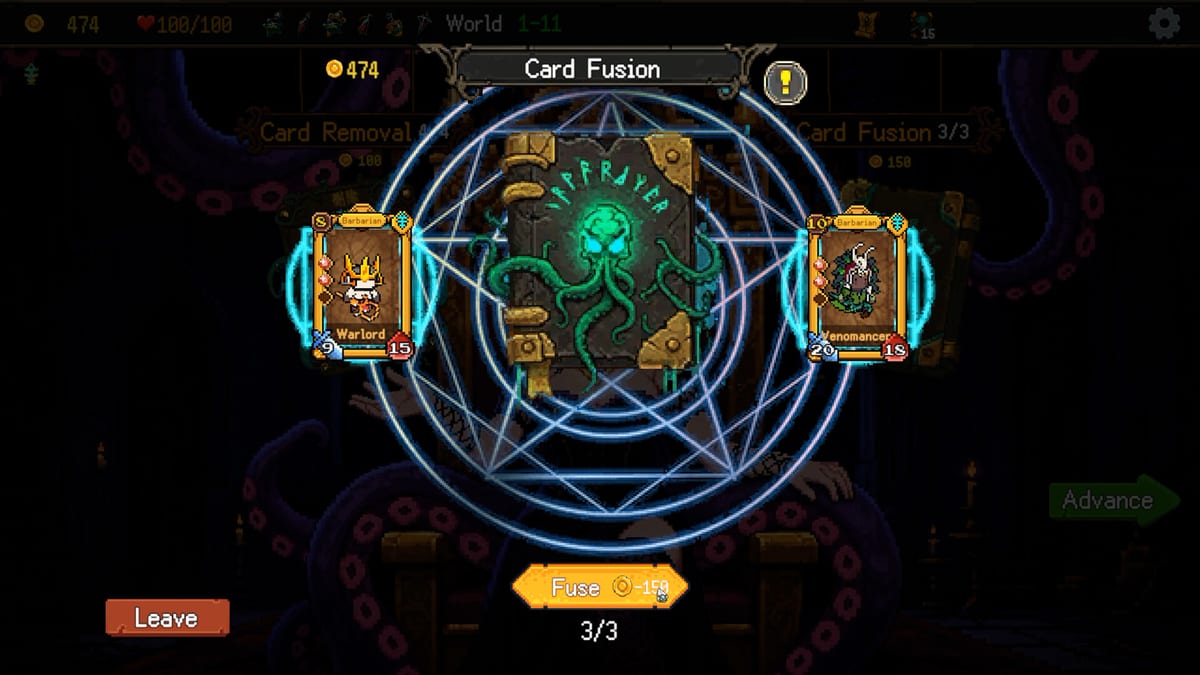
Reward picks should favor creatures that fuse cleanly later. Nearly all creature cards can fuse; hybrids inherit traits from both parents. Early Noble Serpent runs often stall when players hoard flashy uniques that share no fusion lane. Prefer duplicates and complementary traits you can climb toward a hybrid that keeps serpent tempo while adding a second faction keyword for dual-race pressure. Detail lives in Card Fusion and the creature catalog under Creature Cards.
Mid-run fusion and rune package
Once your deck has spare copies, schedule fusion before Ascension modifiers or late bosses inflate enemy density. A mid-tier hybrid that inherits a tanky parent trait plus a damage parent trait usually outscales two unfused mid cards fighting for the same seat. Track energy after each fusion—stronger units often encourage greedier summon patterns; Noble Serpent collapses when a newly fused centerpiece tempts a 20-to-bust line every fight.
Rune choices should protect the class fantasy. Look for bonuses that stabilize summoning costs, reinforce frontline durability, or amplify orderly attack chains rather than pure high-roll damage that only works if you live on the edge of overflow. Cross-check priorities on the Runes Tier List and the full pickup guide at Items Runes. Potions are timing tools: trim a dangerous energy spike, stabilize after a bad event, or push a boss phase—see Items Potions and the Potions Tier List.
Formation habits that define the class
Auto-battler positioning in Summoner’s Gambit changes who acts first and which skills connect. Noble Serpent lines usually want a predictable spine: front seats absorb and contest priority, middle seats carry hybrid damage, back seats protect long-range or aura pieces. When a fight fails, ask whether the wrong unit acted first before you blame card power. Screenshot losing boards in your head—did a backline die because a skill never reached its row, or because you overflowed and handed the opponent free tempo?
Compare seating ideas against role rankings on the Units Tier List and class placement on the Classes Tier List. The Builds Hub links every class if you want a different spine after a few failed runs.
Late game, Ascension, and async PvP
Campaign bosses punish messy energy; Ascension stacks modifiers that make overflow even less forgiving. Keep decks lean: fewer conflicting summons, clearer fusion targets, runes that widen your safe band under 21. In Async PvP, Noble Serpent snapshots look sturdy until opponents seat burst that ignores your polite frontline. Practice counter-formation—swap who occupies the priority seats, protect the hybrid that carries your win condition, and do not assume PvE-safe energy totals remain safe against human-tuned decks.
Common failure modes
Players lose Noble Serpent runs by treating the class as auto-pilot. They over-summon because the early curve feels easy, skip fusion until the bag is clogged, and ignore potion timing until a boss already forced a bust. Another failure mode is copying Lord of Shadows greed without Shadows’ disruption tools—Cheat the Odds is a weapon, not a lifestyle. Stay disciplined, fuse on schedule, and let seating do half the work.
For shopping context and tone, see the Review. For patch swings that move class strength, watch Updates. When you need planning helpers rather than prose, open Tools.
Frequently Asked Questions
Quick answers to the most common questions.
Is Noble Serpent good for beginners in Summoner's Gambit?
Yes. The demo taught its exclusive pool early, and its best lines emphasize controlled energy and clear formation spines rather than constant high-roll busts.
Should Noble Serpent always avoid Energy Overflow?
Avoid accidental backlash. Skilled players still use Cheat the Odds when a calculated risk wins the fight—read Energy Overflow before making overflow your default plan.
What should I fuse toward on Noble Serpent?
Prioritize hybrids that keep a reliable frontline trait while adding damage or a second race keyword. Fuse mid-run once you have complementary parents, not after the bag is full of dead weight.
How does Noble Serpent compare to Lord of Shadows?
Serpent favors orderly tempo and safer energy bands; Shadows leans into disruption and higher variance. Both were demo classes—pick based on whether you want control or chaos.
Which wiki pages pair best with this build guide?
Energy Overflow, Card Fusion, Beginner Builds, the Units and Classes tier lists, and Items for runes and potions.